Join our Official Telegram Channel to receive instant notifications, PDF notes, important announcements, and free study resources. Join Telegram →
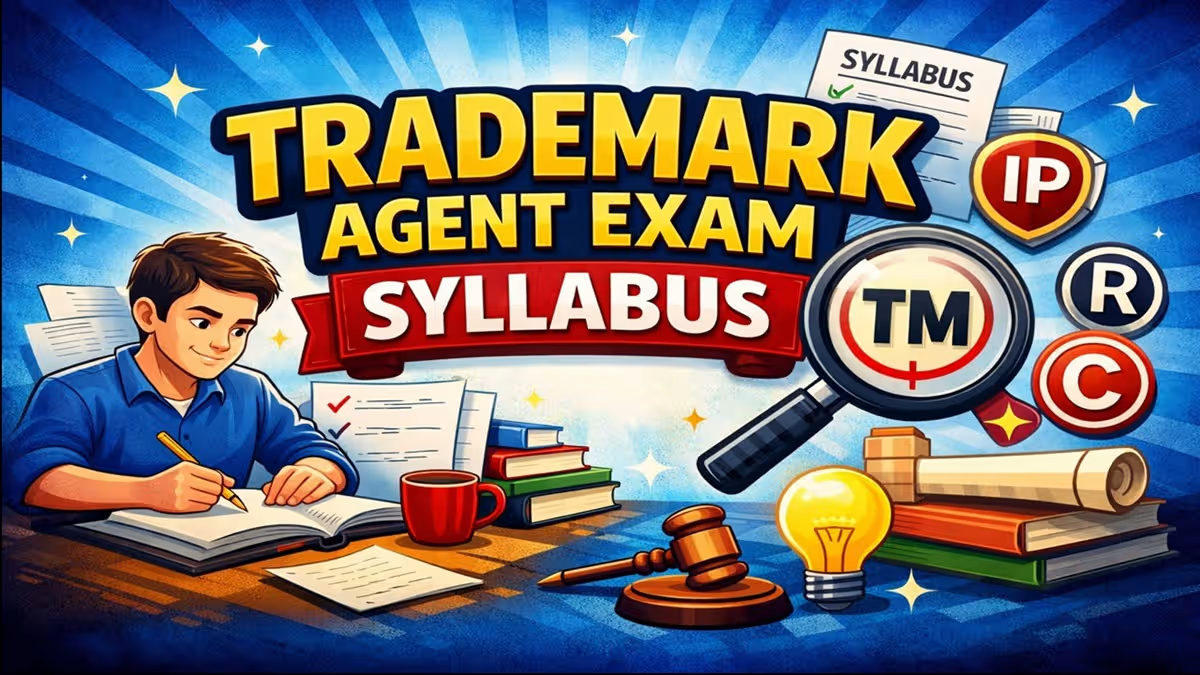
Trademark Agent Exam Syllabus 2027: If you are preparing for the Trademark Agent Exam 2027, understanding the Trademark Agent Exam Syllabus 2027 is the most important step toward success. The syllabus is practical as well as legal in nature, covering trademark law, procedures, drafting skills, and real-world application of Intellectual Property Rights (IPR).
The Trademark Agent Exam Syllabus 2027 is designed to test both theoretical knowledge and practical ability required to practice as a Trademark Agent in India. It mainly covers the Trade Marks Act, 1999, Trade Marks Rules, 2017, procedures before the Trademark Registry, and drafting-related work such as opposition, counter-statements, and evidence affidavits.
Unlike many other exams, this exam focuses heavily on practical application, especially in drafting and procedural aspects. Candidates must not only understand the law but also learn how to apply it in real-life trademark matters.
In addition to legal provisions, candidates are also expected to have a clear understanding of key concepts such as distinctiveness, deceptive similarity, well-known trademarks, and grounds for refusal under Sections 9 and 11 of the Trade Marks Act. A strong grip on landmark case laws and their practical interpretation is essential, as questions often test how well you can apply legal principles in real scenarios.
🔥 Preparing for the Trademark Agent Exam 2027?
📚 Understanding the syllabus is the first and most important step for smart preparation.
Trademark Agent Exam Syllabus Explained:
🎥 This video gives you a clear and simple breakdown of the complete syllabus to boost your preparation.
📌 The first step to smart preparation is understanding the syllabus clearly.
🚀 Watch the full video and start building a strong strategy today.
Another important area of the syllabus is the procedural framework followed by the Trademark Registry. This includes filing of applications, examination reports, replying to objections, hearings, publication in the Trademark Journal, opposition proceedings, and registration. Understanding each step in detail helps candidates not only in clearing the exam but also in handling actual client work effectively.
Finally, drafting plays a crucial role in the Trademark Agent Exam 2027. Candidates must practice writing well-structured replies to examination reports, notices of opposition, counter-statements, and affidavits of evidence. The ability to present arguments clearly, logically, and legally can significantly impact both exam performance and future professional success as a Trademark Agent.
📌 Understand Exam Pattern
Before starting your preparation, make sure you clearly understand the Trademark Agent Exam Pattern 2027. It helps you know the structure, marks distribution, and focus areas of the exam.
In this detailed guide, we will break down the Trademark Agent Exam Syllabus into simple language, covering Paper 1, Paper 2, Viva Voce, and preparation strategy.
Trademark Agent Exam Syllabus 2027 (Easy Guide)
Trademark Agent Exam Pattern 2027
Before understanding the syllabus, you must know the exam structure.
The Trademark Agent Exam consists of:
| Stage | Type | Marks | Duration |
|---|---|---|---|
| Paper 1 | Objective (MCQs) | 100 | 2 Hours |
| Paper 2 | Descriptive (Drafting) | 100 | 3 Hours |
| Viva Voce | Interview | 50 | — |
Qualifying Criteria:
- Minimum 50% in each paper
- Minimum 60% aggregate
👉 This makes it important to perform well in both theory and drafting.
Overview of Trademark Agent Exam Syllabus
The Trademark Agent Exam Syllabus mainly includes:
- Trade Marks Act, 1999
- Trade Marks Rules, 2017
- Trademark Procedures
- Drafting & Practice
- Case Laws
- Practical Application
👉 These are the core areas from which questions are asked in both papers
Trademark Agent Paper 1 Syllabus (Theory + Law)
Paper 1 is objective-based but requires strong conceptual clarity.
(A) Trade Marks Act, 1999
This is the most important part of the syllabus.
You must study:
- Definitions (Section 2)
- Meaning of Trademark
- Types of trademarks (word, device, shape, sound, etc.)
- Absolute Grounds for refusal (Section 9)
- Relative Grounds for refusal (Section 11)
- Well-known trademarks
- Filing of trademark applications
- Examination & objections
- Publication in Trademark Journal
- Opposition (Section 21)
- Registration & renewal
- Assignment & transmission
- Infringement & passing off
- Offences & penalties
👉 Focus on conceptual understanding rather than rote learning
(B) Trade Marks Rules, 2017
Rules are very important because they deal with procedures.
Key topics:
- Filing process (online/offline)
- Forms (TM-A, TM-O, TM-R, etc.)
- Fees structure
- Timelines & deadlines
- Hearing procedures
- Renewal process
- Rectification procedures
👉 Questions are frequently asked on forms + timelines
(C) Trademark Procedures
This is a practical area and highly important.
You must understand:
- Step-by-step trademark registration process
- Filing → Examination → Objection → Reply → Hearing → Registration
- Opposition process
- Renewal & restoration
- Rectification & cancellation
👉 This area is often tested in both Paper 1 and Paper 2
(D) Case Laws
You should have basic understanding of:
- Landmark trademark judgments
- Interpretation of Section 9 & 11
- Passing off vs infringement
- Well-known trademarks
👉 Focus on application-based understanding
High-Weightage Topics in Paper 1
Around 60–70% questions come from:
- Section 9 & 11 (Refusal grounds)
- Trademark registration process
- Opposition
- Infringement & passing off
- Trademark procedures
👉 These topics are repeated every year
Trademark Agent Paper 2 Syllabus (Drafting & Practice)
Paper 2 is the most important and scoring part of the exam.
It tests whether you can actually work as a Trademark Agent.
(A) Drafting of Notices
You must practice drafting:
- Notice of Opposition
- Counter Statement
- Evidence Affidavit
- Reply to Examination Report
👉 This is the core of Paper 2
(B) Reply to Examination Report
One of the most important skills.
You should know how to:
- Handle objections under Section 9
- Handle objections under Section 11
- Provide legal arguments
- Cite case laws (basic level)
(C) Trademark Application Drafting
You may be asked to draft:
- Trademark application details
- Classification of goods/services
- Description of mark
(D) Procedural Problem-Based Questions
These include:
- Case-based scenarios
- Filing strategies
- Legal analysis
👉 This tests your practical understanding
(E) Interpretation Questions
You may be asked to:
- Analyze trademark disputes
- Identify legal issues
- Suggest remedies
Key Skills Required for Paper 2
- Legal drafting
- Logical reasoning
- Clarity of concepts
- Practical application
👉 Practice is the only way to score high in this paper
Trademark Agent Viva Voce Syllabus
The Viva Voce tests:
- Practical understanding of trademark law
- Drafting knowledge
- Communication skills
- Real-life application
Questions may be asked from:
- Your background
- Trademark procedures
- Drafting logic
- Case scenarios
👉 Confidence and clarity are very important here
Topic-Wise Weightage (Strategy Based)
High Priority (60–70%)
- Section 9 & 11
- Trademark procedures
- Drafting (Paper 2)
- Opposition & infringement
Medium Priority (20–30%)
- Case laws
- Assignment & transmission
- Rectification
Low Priority (10%)
- Administrative provisions
- Office structure
👉 Smart study is more important than studying everything
How to Prepare for Trademark Agent Exam Syllabus 2027
1. Start with Bare Acts
Focus on:
- Trade Marks Act, 1999
- Trade Marks Rules, 2017
👉 These are your primary sources
2. Focus on Important Sections
Focus on:
- Section 2
- Section 9
- Section 11
- Section 21
- Section 29
3. Practice Drafting Daily
Paper 2 requires continuous practice.
- Draft 1 opposition notice daily
- Practice counter statements
- Write replies to objections
👉 Consistency is the key
4. Solve Previous Year Papers
This helps you understand:
- Question pattern
- Important topics
- Time management
5. Improve Legal Writing Skills
- Keep language simple and clear
- Focus on structured answers
- Avoid unnecessary complexity
6. Revise Smartly
- Make short notes
- Revise important sections frequently
- Focus on high-weightage topics
Best Study Resources
For covering the Trademark Agent Syllabus:
- IPR Guru (Ultimate Source for IPR Exams)
- Bare Acts (Most Important)
- Previous Year Papers
- IP India Website
- Trademark Manual
Important Links
Follow IPR Guru on Social Media
▶ YouTube |
✖ Twitter (X) |
|
📢 Telegram |
Trademark Agent Exam Syllabus – FAQs
What is the Trademark Agent Exam Syllabus 2027?
The trademark agent exam syllabus 2027 includes topics like the Trade Marks Act, 1999, trademark procedures, drafting of opposition and counter-statements, and practical application of trademark law.
Is the trademark agent syllabus 2027 difficult?
The trademark agent syllabus 2027 is moderate but practical. With proper strategy, drafting practice, and revision, it can be covered effectively.
What subjects are included in trademark agent syllabus 2027?
The trademark agent syllabus 2027 mainly covers the Trade Marks Act, 1999, Trade Marks Rules, drafting, opposition, infringement, and procedural aspects of trademarks.
How many papers are there in Trademark Agent Exam 2027?
The exam consists of Paper I (Objective), Paper II (Descriptive), and Viva Voce. All stages are based on the trademark agent syllabus 2027.
How to prepare for trademark agent syllabus 2027?
To prepare for the trademark agent syllabus 2027, candidates should study bare acts, practice drafting daily, and solve previous year papers.
Is drafting important in trademark agent syllabus 2027?
Yes, drafting is the most important part of the trademark agent syllabus 2027 and plays a crucial role in Paper II.
In conclusion, the Trademark Agent Exam 2027 is not just about theoretical knowledge but also about understanding the practical application of trademark laws in India. A clear understanding of the trademark agent syllabus 2027 will help candidates focus on the most important topics such as refusal grounds, trademark procedures, and drafting work. Instead of studying randomly, aligning your preparation strictly with the trademark agent exam syllabus 2027 can significantly improve your chances of success.
Moreover, consistency and smart preparation are the key factors. Candidates should break down the trademark agent syllabus 2027 into manageable sections and follow a structured study plan. Regular revision, practicing previous year papers, and mock tests based on the trademark agent exam syllabus 2027 will give you a real exam-like experience and boost your confidence.
Another important aspect is focusing on drafting skills, especially for Paper II. Since the exam tests practical ability, merely reading the trademark agent syllabus 2027 is not enough—you must practice drafting notices, counter-statements, and replies regularly. This approach ensures that you are fully prepared for both Paper I and Paper II.
Lastly, staying updated with official notifications and procedural updates is crucial. Keep revisiting the trademark agent syllabus 2027 during your preparation to ensure you are on the right track. With the right strategy, dedication, and a strong grip on the trademark agent exam syllabus 2027, cracking the exam becomes much more achievable.
🎓 Join IPR Guru Academy
Register now to receive structured preparation for Patent Agent, Patent Examiner, Trademark Agent, and CGPDTM Exams, along with exclusive study resources, exam updates, and priority access to upcoming courses.
Register Now