Join our Official Telegram Channel to receive instant notifications, PDF notes, important announcements, and free study resources. Join Telegram →
Understanding the Patent Agent Exam Pattern 2027 not only helps you plan your preparation but also gives you a clear roadmap to crack the exam in the first attempt. Many aspirants focus only on studying the Patents Act, but without knowing how questions are asked and how marks are distributed, their preparation remains incomplete.
Another important aspect of the Patent Agent Exam is its practical nature. Unlike many competitive exams that focus purely on theory, this exam tests both your legal knowledge and your ability to apply it through patent drafting and interpretation. This makes it essential to align your preparation strictly according to the latest exam pattern.
A clear understanding of the Patent Agent Exam Pattern 2027 also helps you manage your time effectively during the exam. When you know the weightage of different sections, you can prioritize high-scoring areas and avoid spending too much time on less important topics. This strategic approach not only improves your efficiency but also increases your chances of maximizing marks within the limited exam duration.
📝 Understanding the Paper 1 pattern is essential before starting your preparation for the Patent Agent Exam.
🎯 Knowing the question types and marking scheme helps you focus on the right strategy and topics.
Patent Agent Exam Paper 1 Pattern Explained:
🎥 Watch this video to clearly understand the complete Paper 1 pattern, including question types and marking scheme.
🚀 This video breaks down Paper 1 in a simple and practical way for better understanding.
🔥 Learn how questions are structured and how marks are distributed to improve your score.
Another key benefit of knowing the Patent Agent Exam Pattern 2027 is that it allows you to practice in a more exam-oriented manner. Instead of random study, you can focus on solving previous year questions, mock tests, and drafting-based problems that closely match the actual exam format. This kind of targeted practice builds confidence and reduces surprises on the exam day.
Moreover, aligning your preparation with the Patent Agent Exam Pattern 2027 ensures that you develop both conceptual clarity and practical skills simultaneously. Regular revision, combined with pattern-based practice, helps you identify weak areas and improve them consistently. With the right strategy and understanding of the pattern, cracking the exam becomes much more achievable.
Moreover, the Patent Agent Exam Pattern 2027 is designed to evaluate candidates on real-world skills required in the intellectual property field. From understanding patent laws to drafting complete specifications, the exam ensures that only candidates with practical competence qualify as registered patent agents in India.
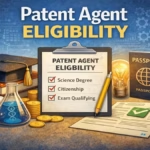
📌 Check Eligibility First
Before solving previous year papers, make sure you meet the Patent Agent Exam eligibility criteria. Many aspirants start preparation without confirming eligibility.
The Patent Agent Exam Pattern 2027 is designed to test both theoretical knowledge and practical application of patent law in India. While Paper I focuses on objective-type questions from the Patents Act, 1970 and related rules, Paper II evaluates a candidate’s ability to apply concepts in real-world scenarios. This includes drafting patent specifications, interpreting claims, and answering problem-based questions. Candidates must not only memorize provisions but also understand their practical implications.
Patent Agent Exam Pattern 2027 – Complete Guide.
Patent Agent Exam Pattern 2027 – Overview
The Patent Agent Examination in India follows a well-defined exam structure and marking scheme, and is conducted by the Office of the Controller General of Patents, Designs & Trade Marks (CGPDTM).
Key Highlights
- Exam Mode: Offline (Written) + Interview
- Papers: 2 Written Papers + Viva Voce
- Total Marks: 300
- Qualifying Marks: Minimum required in each paper
- Duration: 3 Hours per Paper
Patent Agent Exam Pattern 2027 – Detailed Structure
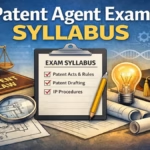
Before understanding the exam pattern, you should check the Patent Agent Exam Eligibility 2027 to confirm your qualification. The Patent Agent Paper Pattern 2027 is divided into two written papers and a viva voce, focusing on both legal knowledge and practical drafting skills.
The Patent Agent Exam consists of three stages:
1. Paper I – Patent Act & Rules
2. Paper II – Drafting & Interpretation
3. Viva Voce (Interview)
Let’s understand each stage in detail.
Paper I – Patent Act & Rules (100 Marks)
This paper tests your theoretical knowledge of patent laws in India.
Subjects Covered:
- The Patents Act, 1970
- Patent Rules, 2003
- Design Act, 2000
- Design Rules, 2001
- Amendments and updates
- Definitions and concepts
- Filing procedures
- Opposition & revocation
- Patent infringement
Exam Pattern:
- Type: Objective + Descriptive (may vary slightly)
- Total Marks: 100
- Duration: 3 Hours
Important Topics:
- Section-wise understanding of the Act
- Patentability criteria (Novelty, Inventive Step, Industrial Applicability)
- Types of patents
- Compulsory licensing
- Patent cooperation treaty (basic overview)
👉 Tip: Focus on bare act reading + PYQs (Previous Year Questions). Most questions are concept-based.
Patent Agent Paper Pattern 2027 (Paper 1)
| Part | Section | No. of Questions | Marks per Question | Total Marks |
| Part A | Objective (MCQ) | 30 | 2 marks | 60 |
| Part B1 | Assertion-Reasoning | 5 | 1 mark | 5 |
| Part B2 | True/False Type | 5 | 1 mark | 5 |
| Part C1 | MCQ (Conceptual/Case-based) | 5 | 3 marks | 15 |
| Part C2 | MCQ (Conceptual/Case-based) | 5 | 3 marks | 15 |
Paper II – Drafting & Interpretation (100 Marks)
This is the most important and scoring paper in the Patent Agent Exam Pattern 2027.
What it tests:
- Your practical skills
- Patent drafting ability
- Analytical thinking
Exam Pattern:
- Type: Fully Descriptive
- Total Marks: 100
- Duration: 3 Hours
Sections Included:
- Patent Drafting (Claims + Specification)
- Case Study Based Questions
- Interpretation of Patent Documents
Important Areas:
- Writing claims (independent & dependent)
- Complete specification drafting
- Abstract writing
- Understanding invention disclosure
- Identifying inventive step
👉 Tip: Practice drafting daily. This paper decides your rank.
Patent Agent Paper Pattern 2027 (Paper 2)
| Part | Section | No. of Questions | Marks per Question | Total Marks |
| Part A | Descriptive / Theory + Short Answers | 8 | 5 marks | 40 |
| Part B | Case-based / Analytical Questions | 3 | 10 marks each | 30 |
| Part C | Drafting + Advanced Case Study | 2 | 10 + 20 marks | 30 |
✍️ Paper 2 is the most important and scoring part of the Patent Agent Exam, focusing on practical skills.
🎯 Strong drafting and interpretation skills are essential to perform well in this paper.
Patent Agent Exam Paper 2 Strategy Explained:
🎥 Watch this video to understand how Paper 2 works, including drafting, case-based questions, and scoring strategy.
🚀 This video explains the practical approach needed to excel in Paper 2.
🔥 Learn drafting techniques, interpretation methods, and how to maximize your score effectively.
Viva Voce (Interview) – 50 Marks
After clearing both written papers, candidates appear for the interview.
What is tested:
- Practical knowledge
- Communication skills
- Understanding of patent law
- Drafting clarity
Key Areas:
- Real-life patent scenarios
- Legal interpretation
- Ethics & professional conduct
- Technical background (basic level)
👉 Tip: Be clear with fundamentals. Interview panel checks your practical understanding, not just theory.
Patent Agent Exam Marking Scheme 2027
| Stage | Marks |
|---|---|
| Paper I | 100 |
| Paper II | 100 |
| Viva Voce | 50 |
| Total | 250 |
Minimum Qualifying Marks:
- 50% marks in each written paper
- 50% marks in Viva Voce
- Aggregate performance matters (60% Aggregate required- 150 Marks)
📌 Important for Aspirants
Most questions in the Patent Agent Exam are based on previous patterns. Understanding PYQs can give you a major advantage.
Patent Agent Exam Pattern 2027 – Important Features
No Negative Marking.
This makes it easier to attempt more questions without fear.
Balanced Focus (Law + Drafting)
You must prepare both theory and practical equally.
Drafting is Key
Paper II carries the same weight but is more scoring.
Interview Matters
Even if you clear written papers, poor performance in viva can affect selection.
Patent Agent Exam Pattern 2027 – Preparation Strategy
Understanding the pattern is not enough—you need a smart strategy.
Start with Bare Act
The Patents Act, 1970 is your Bible.
- Read sections daily
- Highlight important provisions
- Revise regularly
Focus on PYQs (Previous Year Questions)
- 60–70% pattern repeats
- Helps in understanding question trend
- Improves confidence
Master Drafting Skills
For Paper II:
- Practice writing claims
- Study sample patent documents
- Learn structure of specification
Make Short Notes
- Important sections
- Case laws (if any)
- Key definitions
These help in last-minute revision.
Mock Tests & Practice
- Attempt full-length tests
- Improve time management
- Identify weak areas
Prepare for Viva Early
Don’t wait till results.
- Practice speaking
- Revise basics
- Understand practical application
Paper I vs Paper II – Which is Tough?
| Factor | Paper I | Paper II |
|---|---|---|
| Nature | Theoretical | Practical |
| Difficulty | Moderate | High |
| Scoring | High | Moderate, High (if practiced) |
| Preparation | Reading + Revision | Practice + Skill |
👉 Conclusion: Paper II is tougher as compare to paper I.
Common Mistakes to Avoid
❌ Ignoring drafting practice
❌ Only focusing on theory
❌ Not solving previous papers
❌ Poor time management
❌ Skipping viva preparation
Patent Agent Exam Pattern 2027 – Best Study Plan
Ideal 3-Month Plan:
Month 1:
- Complete Patent Act
- Start basic drafting
Month 2:
- Solve PYQs
- Advanced drafting practice
Month 3:
- Mock tests
- Revision + Viva prep
The Patent Agent Exam Pattern 2027 is designed to test both your legal knowledge and practical drafting skills. While Paper I checks your understanding of patent law, Paper II evaluates your real-world ability to draft patents—which is the core skill of a patent agent.
To succeed, you need a balanced approach:
✔ Strong conceptual clarity
✔ Consistent drafting practice
✔ Regular revision
✔ Mock test practice
If you follow the right strategy and understand the exam pattern properly, clearing the Patent Agent Exam becomes much easier.
This article is primarily useful for candidates preparing for the Patent Agent Exam 2027. It is also helpful for aspirants of CGPDTM, Trademark Agent, and other law-related competitive exams such as UPSC, CLAT PG, Judiciary Exams, PCS-J, CA Final, CS Professional, and CMA Final, where basic understanding of intellectual property laws is beneficial.
Important Links
Patent Agent Exam Pattern 2027 – FAQs
1. What is the exam pattern of Patent Agent Exam 2027?
The Patent Agent Exam Pattern 2027 consists of two written papers (Paper I and Paper II) followed by a Viva Voce (interview). Each stage carries 100 marks, making a total of 300 marks. Candidates must qualify each stage separately.
2. How many papers are there in the Patent Agent Exam 2027?
There are two written papers in the Patent Agent Exam 2027:
- Paper I: Patent Act & Rules
- Paper II: Drafting & Interpretation
After clearing these, candidates appear for the Viva Voce.
3. What is the marking scheme of Patent Agent Exam 2027?
The marking scheme is as follows:
- Paper I: 100 marks
- Paper II: 100 marks
- Viva Voce: 100 marks
Total marks = 300. Candidates need at least 50 marks in each stage to qualify. (Aggregate- 60%)
4. Is there negative marking in Patent Agent Exam 2027?
Generally, there is no negative marking in the Patent Agent Exam. However, candidates should always check the official notification for any updates.
5. What is the duration of each paper in Patent Agent Exam 2027?
Each written paper in the Patent Agent Exam 2027 is conducted for 3 hours.
6. Which paper is more important in Patent Agent Exam 2027?
Paper II (Drafting & Interpretation) is considered more important because it tests practical skills like patent drafting and claim writing. It is also the most scoring paper if prepared well.
7. What type of questions are asked in Paper I?
Paper I includes questions based on:
- The Patents Act, 1970
- Patent Rules, 2003
- Legal provisions and concepts
Questions may be objective and descriptive in nature.
8. What is asked in Paper II of Patent Agent Exam?
Paper II focuses on:
- Patent drafting (claims and specifications)
- Case study-based questions
- Interpretation of patent documents
It is a fully descriptive paper.
9. What is the qualifying marks for Patent Agent Exam 2027?
Candidates must score:
- Minimum 50 marks in each written paper
- Minimum 50 marks in Viva Voce
Only then they are considered qualified.
10. Is Viva Voce compulsory in Patent Agent Exam 2027?
Yes, Viva Voce is compulsory. Even after clearing the written exam, candidates must pass the interview to become a registered Patent Agent.
11. How can I prepare for Patent Agent Exam Pattern 2027 effectively?
To prepare effectively:
- Study the Patents Act thoroughly
- Practice drafting regularly
- Solve previous year papers
- Take mock tests
- Prepare for viva alongside written exam
12. Is Patent Agent Exam difficult to crack?
The exam is moderately difficult. Paper I is concept-based, while Paper II requires strong drafting skills. With proper strategy and practice, it can be cleared in the first attempt.
Another important aspect of the exam pattern is the qualifying criteria, which requires candidates to score at least 50% marks in each paper separately. Simply performing well in one paper is not enough — balanced preparation for both Paper I and Paper II is essential. After clearing the written examination, candidates are called for a Viva Voce, which tests their communication skills, clarity of concepts, and overall understanding of patent law procedures.
In recent years, the exam pattern has shown a shift towards analytical and application-based questions, especially in Paper II. Candidates are expected to demonstrate drafting skills similar to real patent practice, including writing claims and complete specifications. Therefore, along with studying the Bare Act, aspirants should regularly practice previous year papers and drafting exercises to align their preparation with the evolving exam pattern.
Follow IPR Guru on Social Media
 LinkedIn LinkedIn |
 YouTube YouTube |
 Twitter (X) Twitter (X) |
 Facebook Facebook |
 Instagram Instagram |
 Telegram Telegram |
🎓 Join IPR Guru Academy
Register now to receive structured preparation for Patent Agent, Patent Examiner, Trademark Agent, and CGPDTM Exams, along with exclusive study resources, exam updates, and priority access to upcoming courses.
Register Now