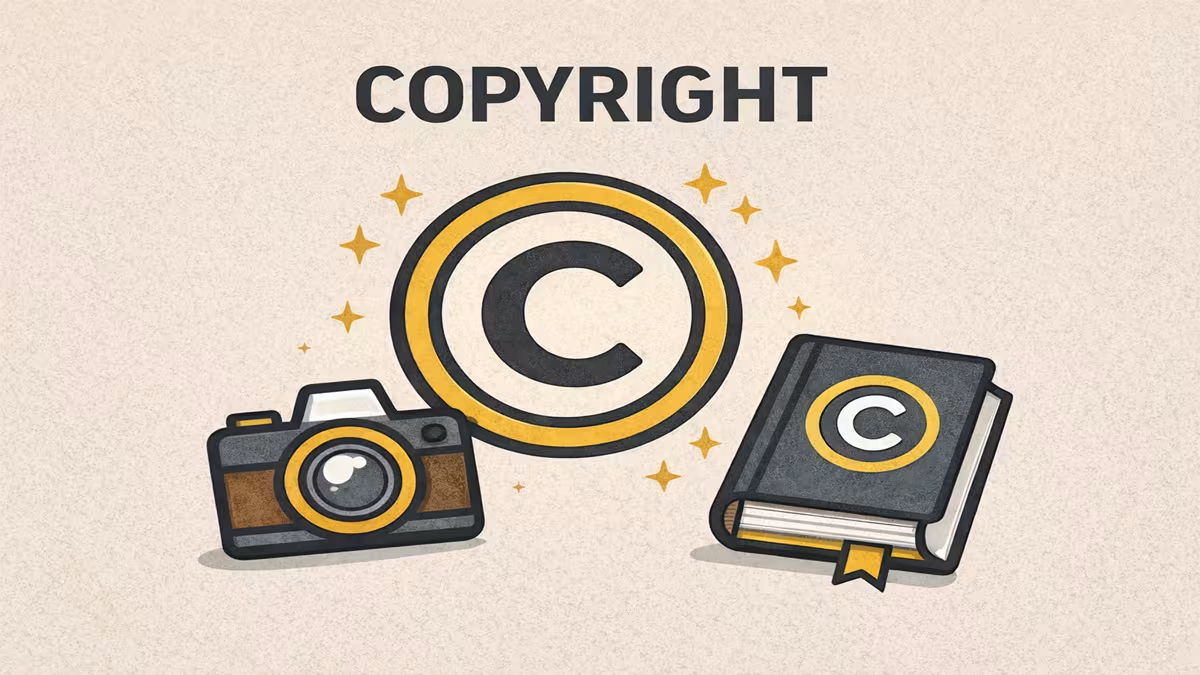
What is Copyright? In the digital age, creative works are produced and shared faster than ever before. Books, music, films, photographs, software, blogs, and videos are constantly being created and distributed online. But how does the law protect creators from copying and misuse of their work? The answer lies in copyright.
Copyright is a fundamental part of Intellectual Property Rights (IPR) and plays a crucial role in protecting the rights of authors, artists, musicians, programmers, and creators. This blog explains what copyright is, why it is important, what types of works are protected, and how copyright works in India, using simple and student-friendly language.
What Is Copyright?
Copyright is a legal right granted to the creator of an original work. It gives the creator exclusive control over the use, reproduction, distribution, and communication of their work for a specific period. The moment an original work is created and fixed in a tangible form, copyright automatically comes into existence. Copyright registration is not mandatory, however, obtaining formal registration is highly advisable as it significantly strengthens your legal position.
A copyright registration certificate serves as prima facie evidence of ownership in court, facilitates enforcement against infringement, and enhances credibility in licensing, assignment, and commercial transactions. Therefore, while not compulsory, copyright registration is a prudent and strategically beneficial step for securing robust legal protection.
In simple words:
Copyright protects creative expression, not ideas.
Types of work:
Literary Works, Artistic Works, Musical Works, Dramatic Works, Cinematographic Films, Sound Recordings
For example:
-
A book written by an author
-
A story written by a writer
-
A song composed and recorded by a musician
-
A photograph clicked by a photographer
-
Software program written by a programmer
| Work / Term | Section |
| Literary Work | Section 2(o) |
| Dramatic Work | Section 2(h) |
| Musical Work | Section 2(p) |
| Artistic Work | Section 2(c) |
| Cinematograph Film (Film) | Section 2(f) |
| Sound Recording | Section 2(xx) |
| Computer Programme | Section 2(o) |
Legal Meaning of Copyright
Copyright is the right given by law to creators over their literary, artistic, musical, and dramatic works, as well as films, sound recordings, and software.
Unlike patents or trademarks, copyright does not protect inventions or brand names. It protects the way ideas are expressed.
Why Is Copyright Important?
Copyright serves multiple purposes for both creators and society.
1. Protection of Creativity
It prevents unauthorized copying or misuse of creative works.
2. Economic Benefit
Creators can earn income by selling, licensing, or publishing their work.
3. Moral Rights
Copyright ensures recognition and respect for the creator’s work.
4. Encouragement of Innovation
Legal protection motivates people to create more original content.
5. Legal Remedy
Copyright law provides remedies against infringement and piracy.
What Types of Works Are Protected by Copyright?
Copyright protects original works in the following categories:
Literary Works
Books, articles, essays, computer programs, software, data base, and blogs.
Artistic Works
Paintings, drawings, sculptures, and architectural designs.
Musical Works
Songs, compositions, and sheet music.
Dramatic Works
Plays, scripts, and choreographed performances.
Cinematographic Films
Movies, short films, and animations.
Sound Recordings
Audio recordings, podcasts, and music tracks.

What Is Not Protected by Copyright?
Copyright does not protect:
-
Ideas or concepts
-
Facts or data
-
Mathematical formulas
-
Methods or procedures
-
Government laws or judgments
Only the original expression of an idea is protected—not the idea itself.
Who Is the Owner of Copyright?
Usually, the creator of the work is the first owner of copyright.
However, ownership can change in cases such as:
-
Works created under employment
-
Commissioned works
-
Assigned or licensed works
Ownership depends on agreements and legal provisions.
Rights of a Copyright Owner
Copyright provides two main types of rights:
1. Economic Rights
These include the right to:
-
Reproduce the work
-
Distribute copies
-
Perform or communicate the work to the public
-
Make adaptations or translations
-
License or assign the work
2. Moral Rights
These include:
-
Right to claim authorship
-
Right to prevent distortion or misuse of the work
Term of Copyright Protection in India
The duration of copyright varies depending on the type of work.
| Type of Work | Term of Copyright | Section |
| Literary, Dramatic, Musical & Artistic Works (published during author’s lifetime) | 60 years after the death of the author | Section 22 |
| Anonymous & Pseudonymous Works | 60 years from the year of first publication | Section 23 |
| Posthumous Works (published after author’s death) | 60 years from the year of first publication | Section 24 |
| Cinematograph Films | 60 years from the year of publication | Section 26 |
| Sound Recordings | 60 years from the year of publication | Section 27 |
| Government Works | 60 years from the year of first publication | Section 28 |
| Works of Public Undertakings | 60 years from the year of first publication | Section 28A |
| Works of International Organisations | 60 years from the year of first publication | Section 29 |
After expiry, the work enters the public domain.
Copyright Registration in India
Copyright registration is not mandatory, but it serves as legal evidence in case of disputes.
Steps for Copyright Registration
-
Filing an application with the Copyright Office
-
Diary number issued
-
Examination of the application
-
Registration certificate issued (if no objections)
Registration strengthens legal protection and ownership claims.
Copyright Infringement
Copyright infringement occurs when someone uses a copyrighted work without permission, in violation of the owner’s rights.
Common Examples
-
Pirated movies or music
-
Copying articles or blogs
-
Using images without permission
-
Software piracy
Remedies for Infringement
-
Injunction
-
Monetary damages
-
Account of profits
-
Criminal penalties in serious cases
Copyright vs Trademark vs Patent
-
Copyright protects creative works
-
Trademark protects brand identity
-
Patent protects inventions
Each form of IPR serves a different purpose and operates independently.
Why Copyright Is Important in the Digital Era
With online platforms, content sharing is easy—but so is copying. Copyright ensures:
-
Protection against digital piracy
-
Fair compensation for creators
-
Legal ownership in online disputes
-
Growth of creative industries
For students, influencers, educators, developers, and artists, copyright awareness is more important than ever.
Copyright is a powerful legal tool that protects creativity and rewards originality. It gives creators control over how their work is used and ensures they receive recognition and economic benefits. Whether you are a student, writer, artist, or entrepreneur, understanding copyright is essential in today’s digital and knowledge-driven world.
By respecting copyright, we support creativity, innovation, and ethical use of intellectual property.
Important Links
Follow IPR Guru on Social Media
▶ YouTube |
✖ Twitter (X) |
|
📢 Telegram |
Frequently Asked Questions (FAQs)
Is copyright registration mandatory to claim infringement remedies in India?
No. Under the Copyright Act, 1957, copyright subsists automatically upon creation of an original work fixed in a tangible medium. However, registration serves as prima facie evidence of ownership under Section 48 and strengthens evidentiary value in infringement proceedings.
Can unpublished works be registered under Indian copyright law?
Yes. Both published and unpublished works are eligible for registration, provided they satisfy the requirement of originality under the Act.
What is the term of copyright protection for literary works in India?
For literary, dramatic, musical, and artistic works, the term is the lifetime of the author plus 60 years, calculated from the beginning of the calendar year following the author’s death and for other works (Anonymous & Pseudonymous Works, Posthumous Works, Sound Recordings, Cinematograph Films, Government Works, Works of Public Undertakings, Works of International Organisations
Can moral rights exist independently of economic rights?
Yes. Under Section 57 of the Copyright Act, 1957, authors retain moral rights (right of paternity and integrity) even after assignment of economic rights, and these survive independently.
Does copyright protect ideas, concepts, or only expression?
Copyright protects the expression of ideas, not the ideas themselves.